Even a small tear in your roof felt can let water in, damage insulation, and lead to costly repairs. Acting quickly can stop leaks, prevent damp, and protect your home until a proper repair can be done from the outside.
You can repair roof felt from inside, but this works only for small, easy-to-reach damage. Minor splits or holes can be patched to reduce leaks and limit damage. Internal repairs won’t fix widespread damage, old felt, or problems caused by broken tiles.
This guide will show you how to find the damage, carry out roof safely felt repair from inside, and know when to call professional roofers in Bishops Stortford.
Assessing Roof Felt Damage
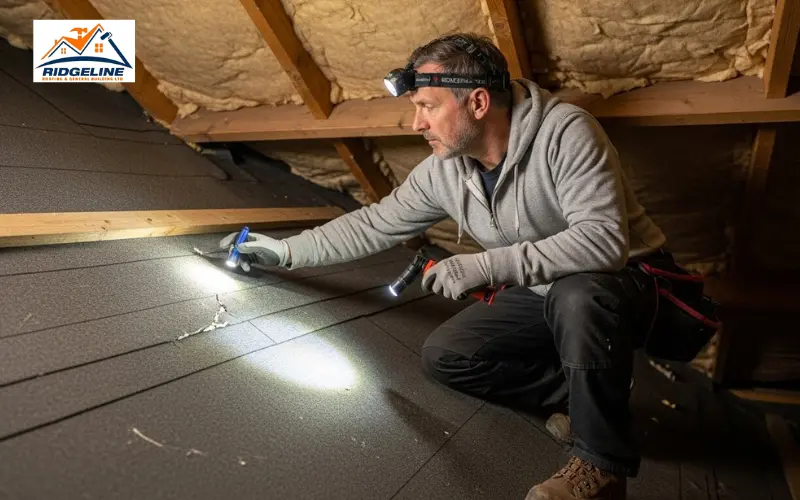
Before you start any repair, it’s important to understand the extent of the damage. Enter your loft and carefully examine the roof felt. Look for small tears, holes, damp patches, or areas where the felt has lifted. After rain, check for water drips or staining on insulation and timber. Water doesn’t always fall directly below the leak, so trace any wet spots upward to find the source.
Next, consider whether the damage is minor or more serious. Small holes, short tears, or light damp can often be fixed from inside with a simple patch. However, larger gaps, multiple leaks, or damage near joints usually require replacing the affected section or calling a professional roofer. If you see signs of rot in the timber or widespread felt deterioration, it’s best to hire an experienced roofer. Acting quickly can prevent further damage and protect the rest of your roof.
Tools and Materials You’ll Need
Before starting, gather these:
- Torch or work light
- Dust mask and gloves
- Roofing felt repair tape or flexible flashing tape
- Bitumen-based roofing adhesive (cold applied)
- Scissors or utility knife
- Clean cloth
Important: Do not use duct tape. It will fail in damp or cold conditions. Always use roofing-specific materials designed for temperature changes and moisture.
How to Repair Roof Felt From Inside the Loft (Step-by-Step)
Step 1: Find the Damage
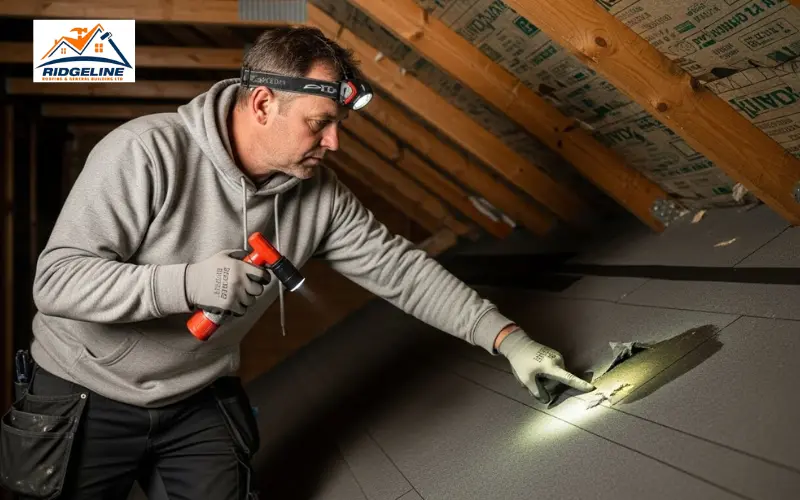
Start by carefully entering your loft and inspecting the roof felt. Look for small tears or holes, damp patches, or water drips after rainfall. Once located, mark the spot with chalk or tape so it is easy to find when you start the repair. For tricky cases, consider consulting roofing contractors to locate leaks accurately.
Step 2: Prepare Your Work Area
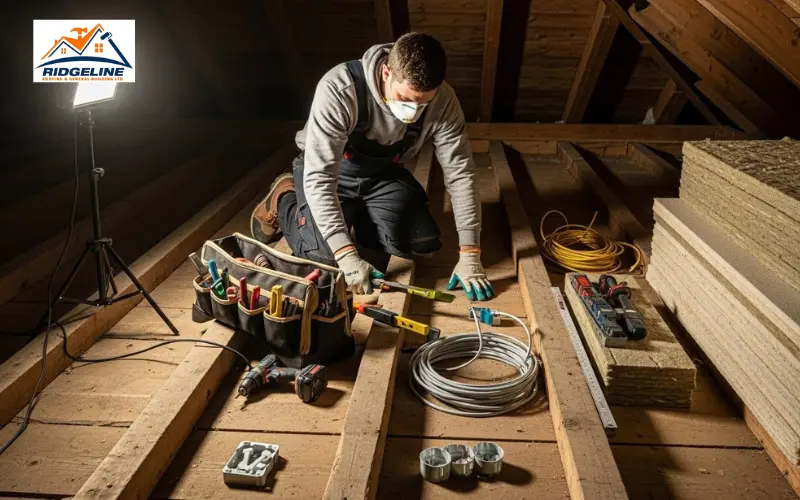
Before beginning the repair, ensure you are wearing gloves, a dust mask, and sturdy shoes. Always step on joists and avoid standing on insulation to prevent damage or injury. Make sure the felt is completely dry, as moisture can prevent adhesive from sticking properly. Keep a torch or work light handy so you can clearly see the damaged area while working.
Step 3: Clean the Felt
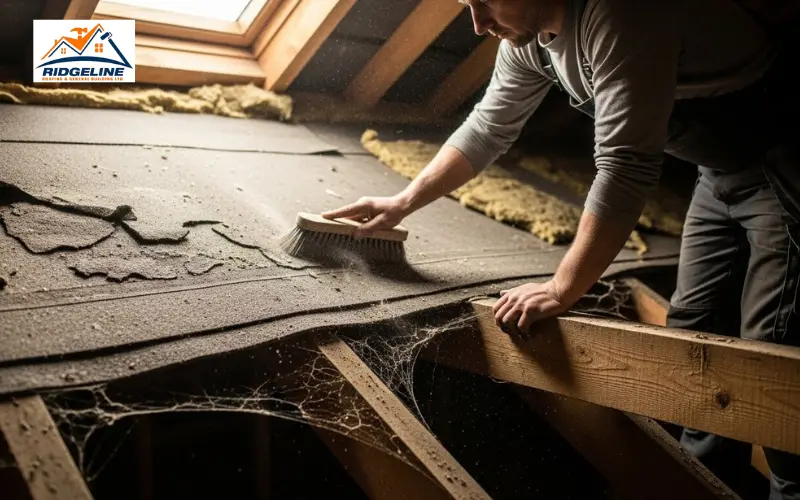
Gently remove dust, cobwebs, and any loose debris from the damaged area using a dry cloth or soft brush. Cleaning the surface is important, as it ensures that the adhesive will bond correctly and creates a more effective seal. If the felt is slightly damp, blot it dry and allow it to air out before applying the patch.
Step 4: Cut and Prepare the Patch
Measure the damaged area and cut a piece of roofing felt that is at least two to three inches larger on all sides. Make sure the edges of the patch are straight and neat, as a well-shaped patch will sit flat and seal better. Using the right-sized patch helps prevent peeling and ensures the repair lasts longer.
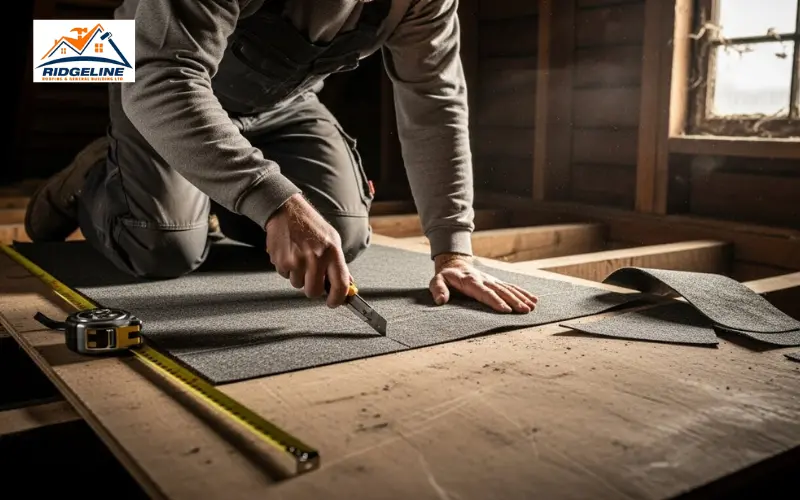
Step 5: Apply Roofing Adhesive
Spread a bitumen-based roofing adhesive evenly around and under the damaged area. Apply adhesive to the underside of the patch as well. Press the edges of the torn felt together if possible, creating a stronger waterproof seal. Avoid using excessive adhesive, but ensure the entire patch area is covered adequately to prevent leaks.

Step 6: Position and Secure the Patch
Carefully place the patch over the damaged felt. Press from the center outward to remove air bubbles and ensure full contact with the existing felt. Use a roller, flat tool, or your gloved hands to press the patch firmly across its entire surface. Check that it sits flat and completely covers the tear.
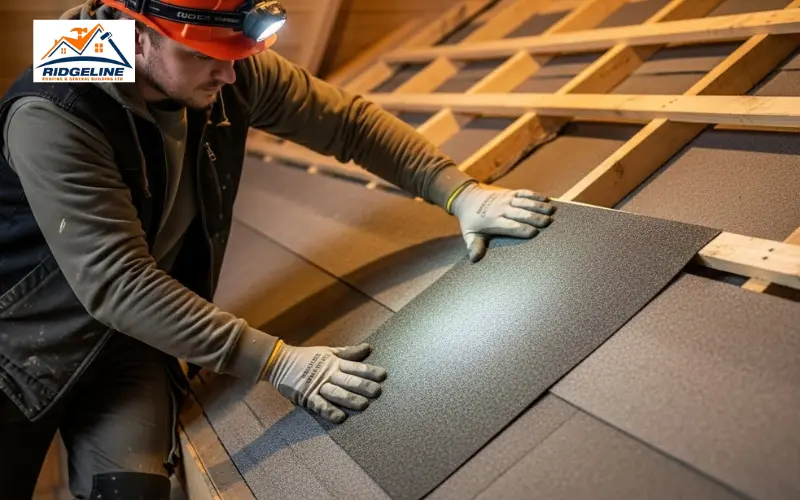
Step 7: Seal the Edges
Apply an extra layer of adhesive along all edges of the patch. Smooth it with a spatula, trowel, or gloved finger to create a watertight seal. Properly sealing the edges is critical to prevent water from seeping underneath the patch and causing further damage.
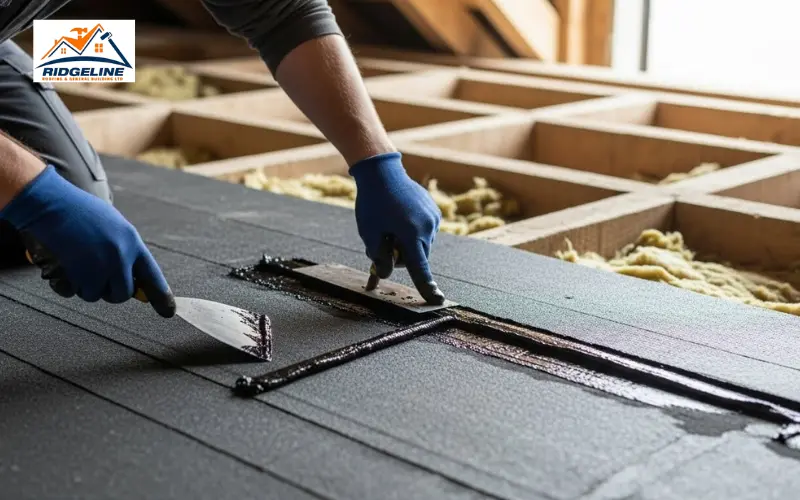
Step 8: Let the Repair Cure
Allow the adhesive to dry fully according to the manufacturer’s instructions, which usually takes several hours. Avoid stepping on or disturbing the patch while it cures. Once dry, inspect the patch to ensure the edges are secure and that there are no gaps or lifted sections.
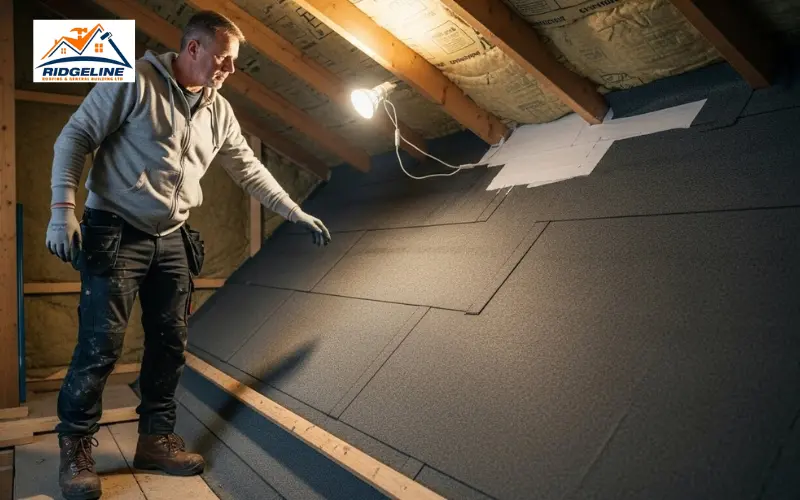
Step 9: Check Nearby Felt Sections
Inspect surrounding felt for cracks or weak spots. Repair minor damage immediately to reduce future leaks. If multiple small issues are present, consider professional roof repair services to ensure the roof remains fully protected.
Common Signs the Repair Has Failed
- Damp insulation
- New water stains
- Musty smells
- Drips after rainfall
If these appear, professional inspection is recommended.
When You Should NOT Repair Roof Felt From Inside
An internal repair will not solve the issue if:
- Roof tiles or slates are damaged
- Felt is cracking or falling apart
- Water is entering from higher up the roof
- Multiple leaks are present
- The roof structure shows signs of rot
In these cases, replacing felt on roof or a full external repair is necessary.
Should You Repair Roof Felt Yourself or Hire a Roofer?
DIY repair works for small, simple damage only. You should contact professional roofers if:
- The leak source is unclear
- The felt is deteriorating
- Tiles need replacing
- You want a long-term solution
Our experienced roofers in Bishops Stortford can inspect your roof and recommend whether an internal repair is suitable or a full external fix is needed. For an idea of potential costs, you can check this guide on roof repair costs or get a free, transparent quote from Ridgeline Roofing and General Building Ltd.
How to Prevent Future Roof Felt Damage
- Check your loft twice a year and after storms
- Keep vents and loft spaces clear for airflow
- Repair small tears quickly
- Fix slipped or broken tiles as soon as possible
Conclusion
Repairing roof felt from inside can work for small, accessible damage, but it’s not permanent. Acting quickly helps prevent leaks, timber damage, and costly repairs later. For widespread damage, old felt, or recurring leaks, call a professional roofer for a proper fix.