Gutters are a vital part of your home’s roof drainage system. When they are clean and working properly, they carry rainwater safely away from your roof, walls, and foundations. When they are blocked, however, they can cause serious and expensive damage.
Many homeowners don’t think about gutter maintenance until a problem appears. This guide has been compiled by our local roofers to help you understand how often gutters should be cleaned, what can go wrong when they aren’t, and the warning signs to watch for can help you avoid costly repairs.
Why Gutter Cleaning Is Important
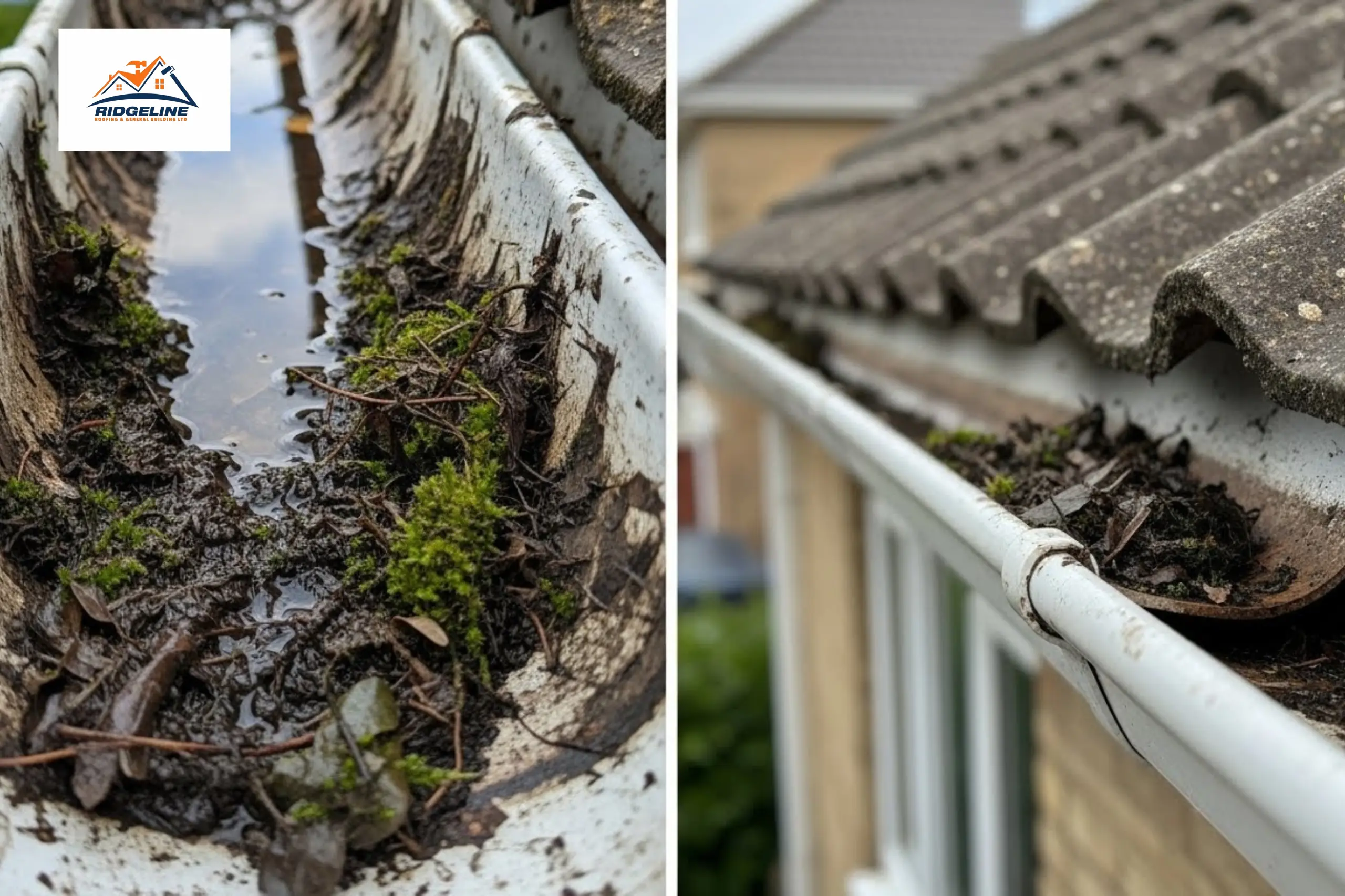
Blocked gutters stop water from flowing through the gutter system and into the downpipes. Instead, rainwater overflows, runs behind the guttering, or backs up under the roof edge. Over time, this leads to water damage affecting both the outside and inside of the property.
Regular cleaning keeps water moving where it should and helps prevent avoidable damage.
Signs Your Gutters Need Cleaning
Watch for these clear warning signs:
- Water overflowing from gutter edges
- Standing water in gutter channels
- Bad smells coming from gutters
- Water dripping behind gutter lines
- Damp patches on walls or ceilings
- Birds or insects nesting
- Gutter pulling away from house
Problems Caused by Clogged Gutters
1. Roof Leaks and Internal Damage
When clogged gutter problems are left untreated, water can sit on the roof or seep under tiles. This often results in:
- Roof leaks
- Damp insulation
- Cracked plaster and stained ceilings
Delaying repairs can turn a small issue into a major roofing expense. If you notice a small leak, here’s how to fix a leaking gutter joint before it causes bigger damage.
2. Damp Walls and Mould Growth
Overflowing gutters allow water to run down exterior walls, causing:
- Damp patches on walls and ceilings
- Peeling paint and stained surfaces
- Mould and mildew, which can affect indoor air quality and health
3. Foundation and Structural Damage
One of the main roles of gutters is to protect your foundations. When water is not directed away:
- Soil around the house becomes saturated
- Cracks may form in the foundations
- Long-term structural damage can develop
4. Exterior Property Damage
Excess moisture can damage:
- Brickwork and render
- Wooden doors and window frames
- Fascias and soffits
5. Pest Infestations
Standing water in gutter channels creates the perfect environment for:
- Mosquitoes and insects
- Birds nesting
- Rodents and ants
6. Gutters Pulling Away From the House
When gutters fill with debris and water, the extra weight puts stress on the fixings. This can lead to:
- Sagging sections
- Loose brackets
- Gutter pulling away from house or collapsing
7. Poor Drainage Around the Property
Blocked gutters often result in water pooling in gardens, driveways, or pathways due to poor roof drainage, increasing the risk of flooding and slips.
How Often Should Gutters Be Cleaned?
Most professionals recommend cleaning gutters at least twice a year. But the fact is that gutter cleaning arrangements depend on the environment of your home.
The Two-Times-a-Year Rule
- Late Spring: Clears debris left from winter and early growth
- Autumn: Removes fallen leaves before heavy rain and cold weather
Homes Surrounded by Trees
If your property is near trees, gutters should be checked every 3–4 months. Leaves, twigs, and sap increase the risk of clogged gutter problems.
Before Heavy Rainfall
Cleaning gutters before periods of prolonged rain helps prevent water dripping behind gutter edges and entering the roof structure.
Gutter Maintenance Tips
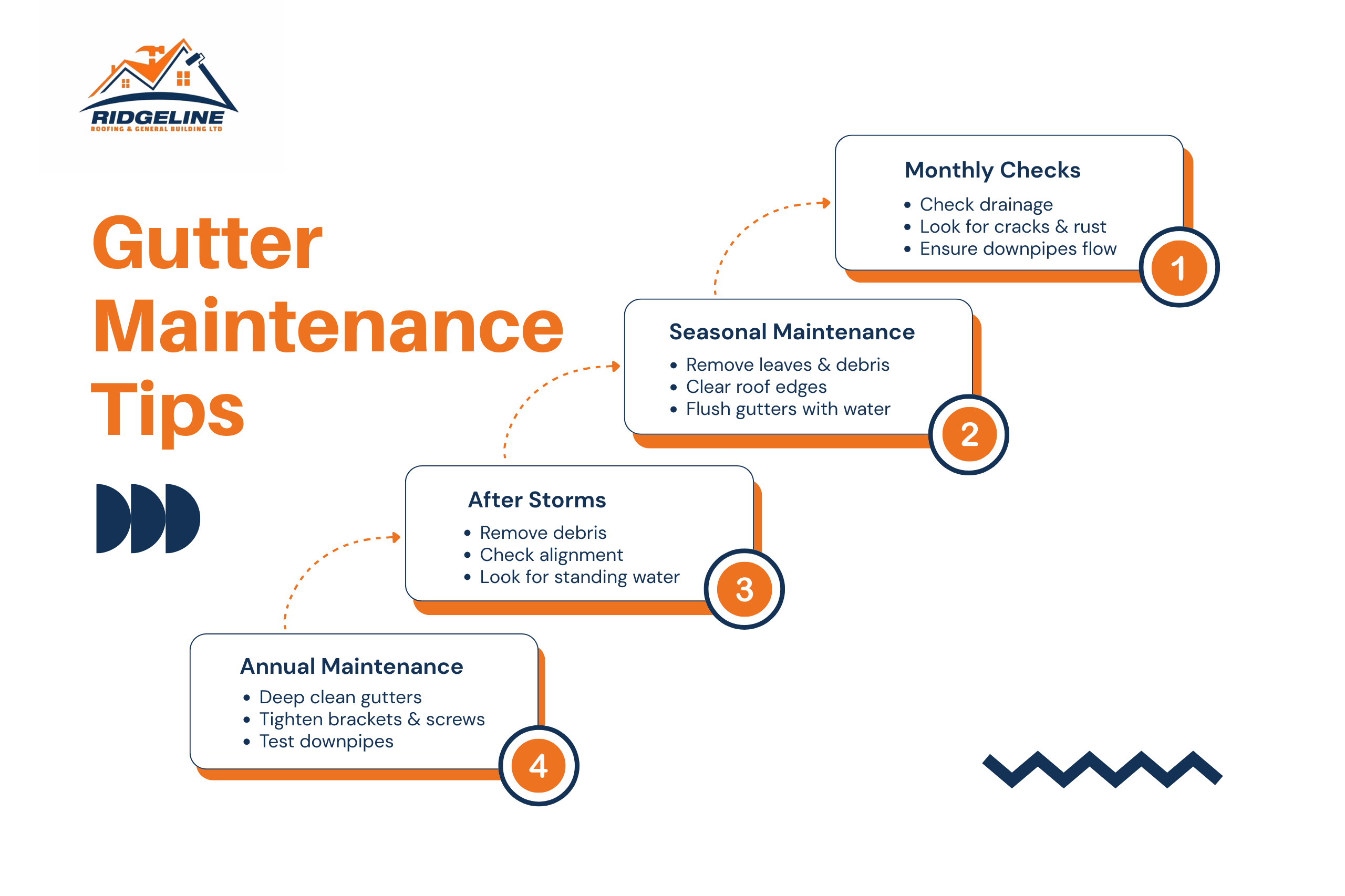
Monthly Checks
- Inspect gutter drainage after rainfall
- Check for cracks, rust, or loose brackets
- Make sure downpipes are flowing freely
Seasonal Maintenance
- Remove leaves and debris before winter
- Clear buildup from roof edges
- Flush gutters and downpipes with clean water
After Storms or Strong Winds
- Check for new debris
- Inspect alignment and fixings
Annual Maintenance
- Full gutter cleaning
- Tighten brackets and screws
- Test downpipes for hidden blockages
For safer cleaning, see our guide on how to clean gutters from the ground.
How to Prevent Gutter Clogs
- Install gutter guards or leaf protection
- Trim overhanging tree branches
- Carry out regular visual inspections
- Schedule professional gutter maintenance
These steps help prevent blockages and extend the life of your gutter system.
Safety Tips for Gutter Cleaning
- Always use a stable ladder
- Wear gloves and eye protection
- Never clean gutters during rain
- For high or difficult roofs, use a professional service
Conclusion
Regular gutter cleaning is essential for protecting your roof, walls, foundations, and overall property maintenance. By following the correct gutter cleaning frequency and recognising the signs your gutters need cleaning, you can avoid costly repairs, water damage, and pest problems. Proactive maintenance keeps your home safe, dry, and in good condition year-round.
Keep your gutters and roof in top condition, contact our roofing contractors in Bishops Stortford
today for a professional inspection and gutter cleaning service.