A flat roof leak should never be ignored. Even small damage can allow water to soak into insulation and decking. This often leads to damp, mould, and structural issues. Knowing how to repair a flat roof at the right time can prevent costly repairs later.
This guide explains the early signs your flat roof needs repairing, followed by a clear step-by-step flat roof repair guide. We also explain when DIY is suitable and when a professional flat roofing repair is the better option for properties in Bishop’s Stortford and nearby areas.
Signs Your Flat Roof Needs Repair
Before starting repairs, it’s important to spot the warning signs. Flat roofs often fail gradually, not suddenly.
Visible Signs on the Roof Surface
- Cracks or splits in the roof membrane
- Bubbling or blistering under felt, EPDM, or GRP roofing
- Tears, cuts, or punctures
- Lifting edges or exposed seams
- Standing water that remains after 48 hours
Signs Inside the Property
- Water stains on ceilings or walls
- Damp patches or mould growth
- Dripping water after rainfall
- Musty smells in rooms below the roof
If you notice any of these, flat roof repairs should be carried out as soon as possible.
Tools & Materials Needed to Repair a Flat Roof
Before starting, gather these essentials for a safe and effective repair:
- Tools: Ladder, safety harness, utility knife, putty knife, chalk/marker
- Materials: Waterproof sealant, roofing adhesive, patch material (EPDM, felt, or GRP), flashing tape
Quick tip: Using the right tools and materials ensures your flat roof leak repair lasts longer and avoids repeated leaks.
How to Repair a Flat Roof: Step-by-Step Guide
You can handle small leaks yourself if the damage is localised and the roof is in good shape.
Safety first: Only attempt repairs in dry weather, using proper access and fall protection.
Step 1: Clean and Inspect the Roof
- Remove leaves, dirt, and debris
- Clearing blockages is essential, and cleaning gutters from the ground is a safe way to improve drainage without working at height.
- Allow the roof surface to dry completely
- Mark all damaged areas clearly
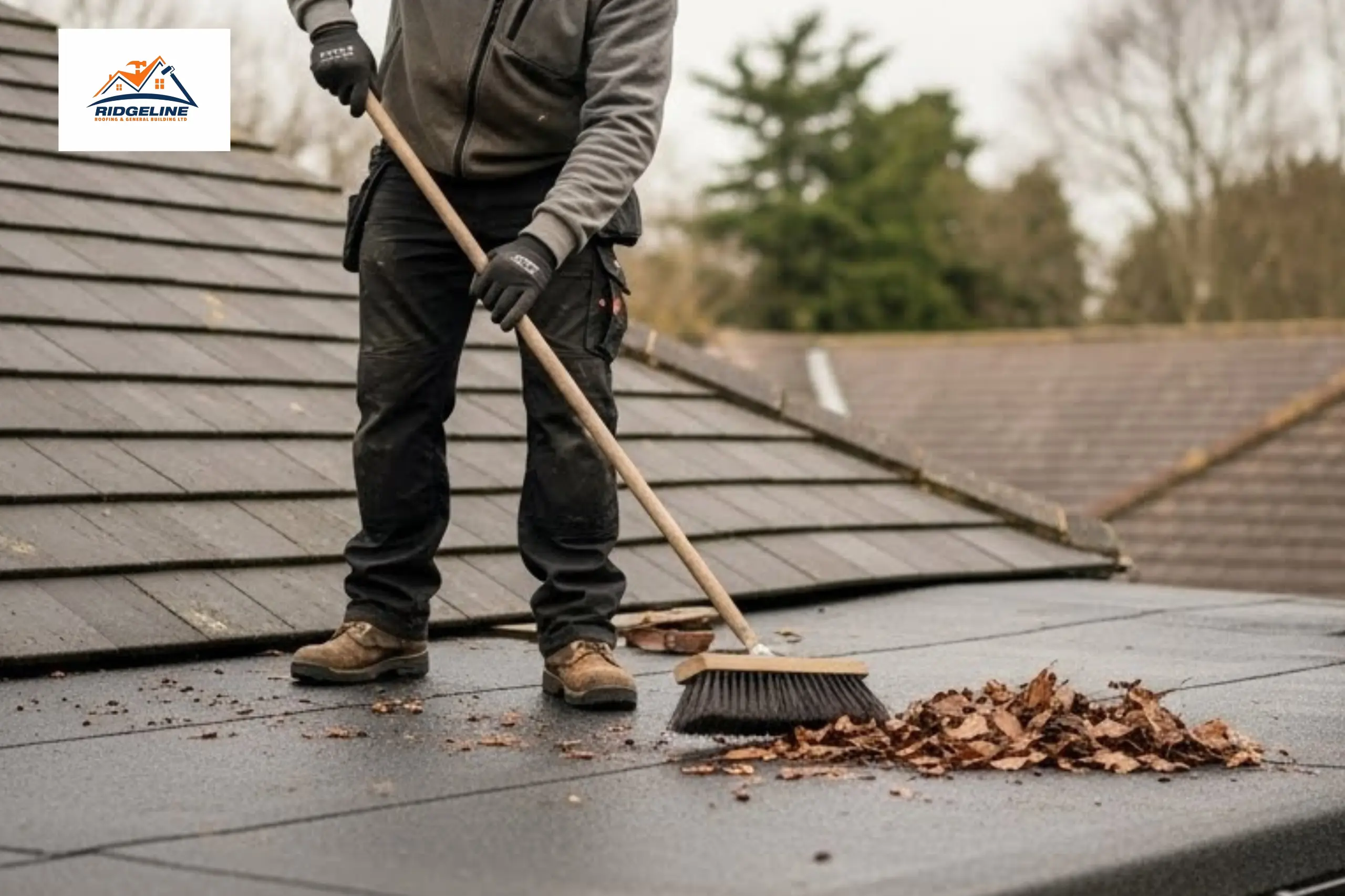
Make sure the roof is clean and dry so your repair will last.
Step 2: Repair Small Cracks and Pinholes
Suitable for hairline cracks or very small punctures.
- Clean the damaged area thoroughly
- Apply a compatible waterproof roof sealant (polyurethane or membrane-specific)
- Smooth the sealant to fully cover the crack
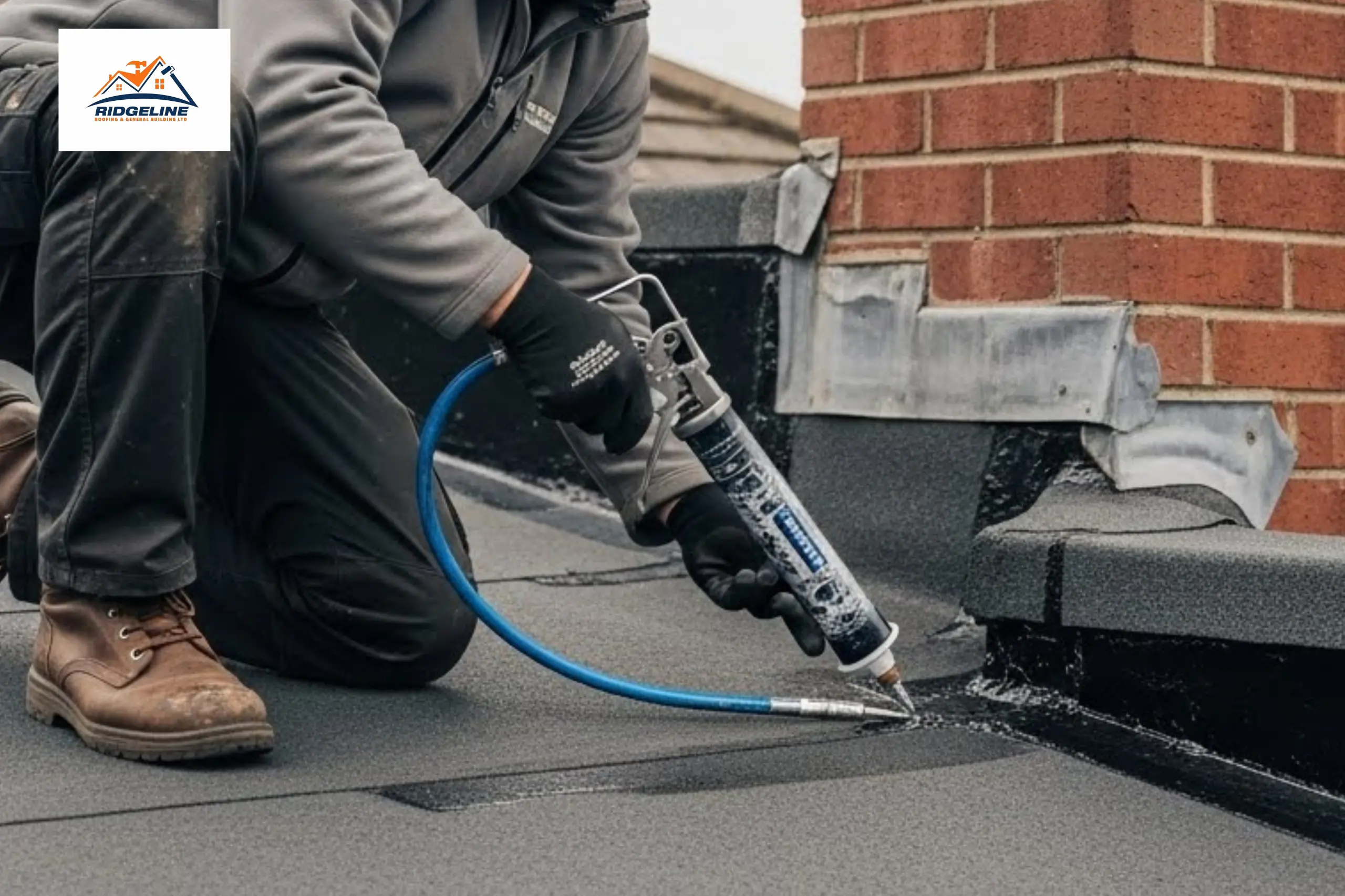
This method works for early repair of flat roof leak issues.
Step 3: Fix Blisters or Bubbles
Blisters indicate trapped air or moisture beneath the membrane.
- Carefully cut a small slit through the blister
- Allow moisture to fully evaporate
- Apply roofing adhesive beneath the membrane
- Press flat and seal the slit with waterproof sealant
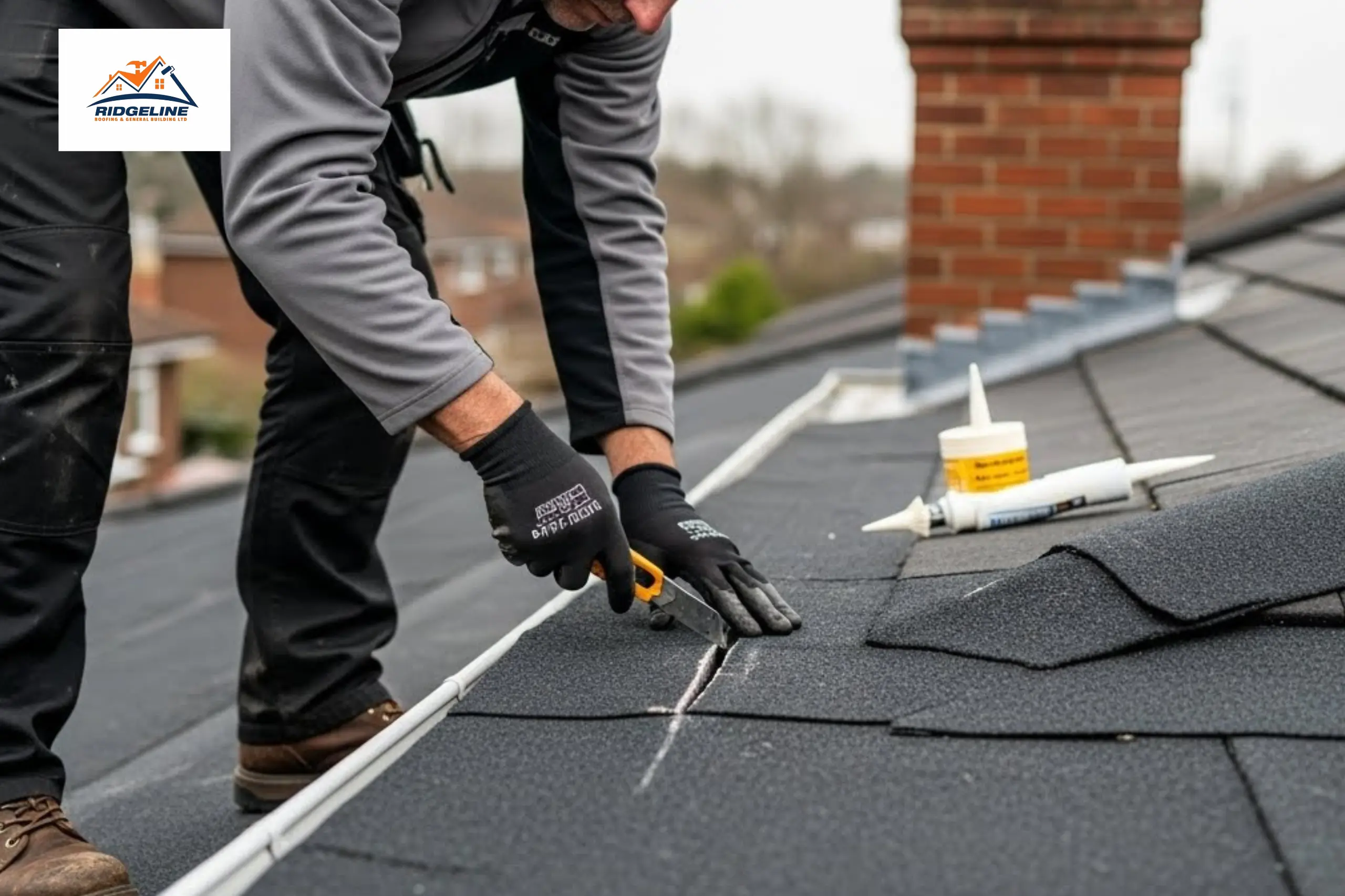
Step 4: Patch Tears or Holes
For visible holes or cuts in the membrane:
- Trim away loose or damaged material
- Cut a matching patch at least 75mm larger on all sides
- Apply roofing adhesive and press the patch firmly in place
- Seal all edges thoroughly
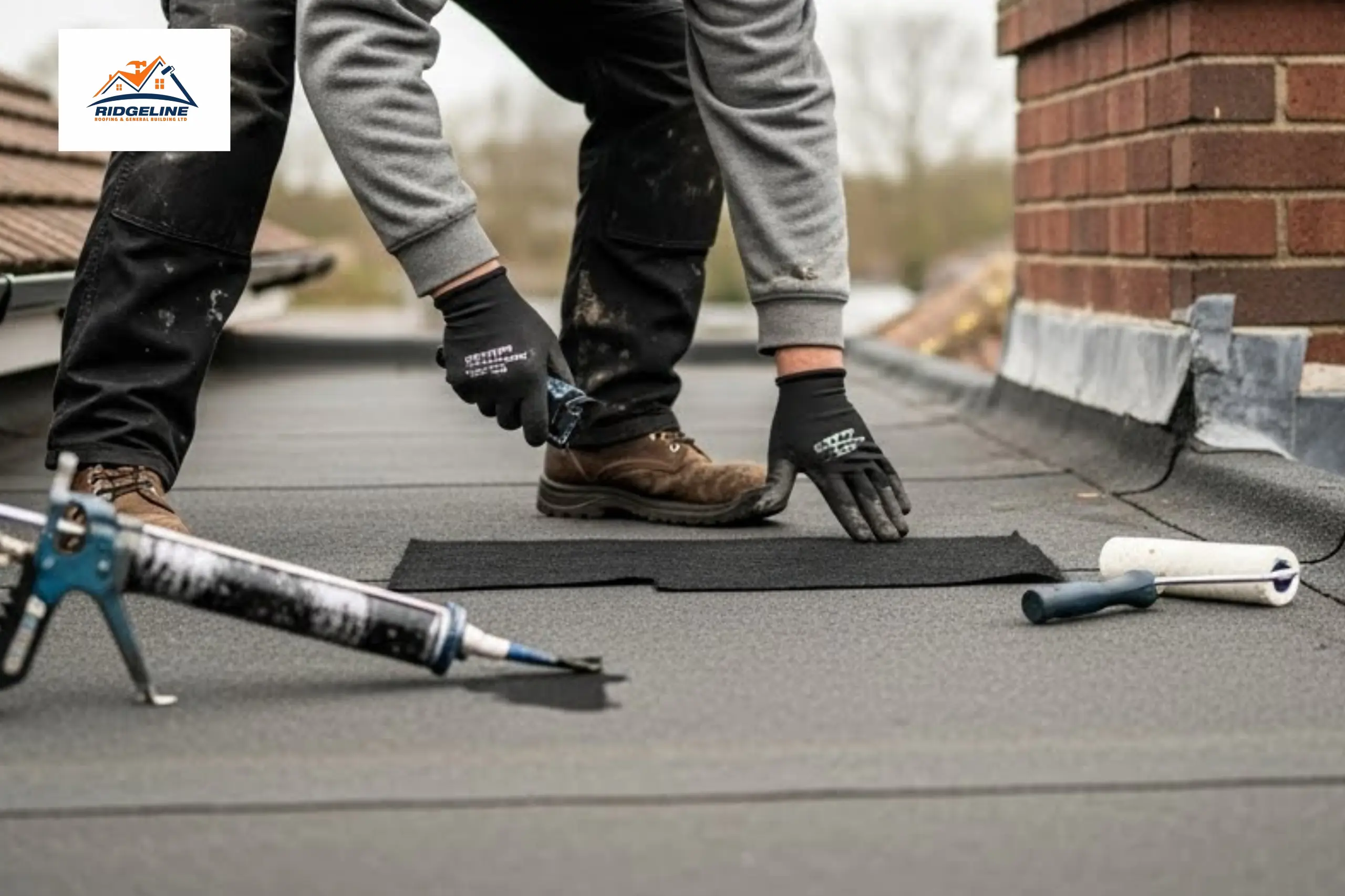
This is a common method used when repairing flat roofs with localised damage.
Step 5: Reseal Seams and Flashing
Seams and flashing are common leak points.
- Remove old or cracked sealant
- Clean the area properly
- Apply a continuous bead of high-quality waterproof sealant
- Use flashing tape where required for added durability
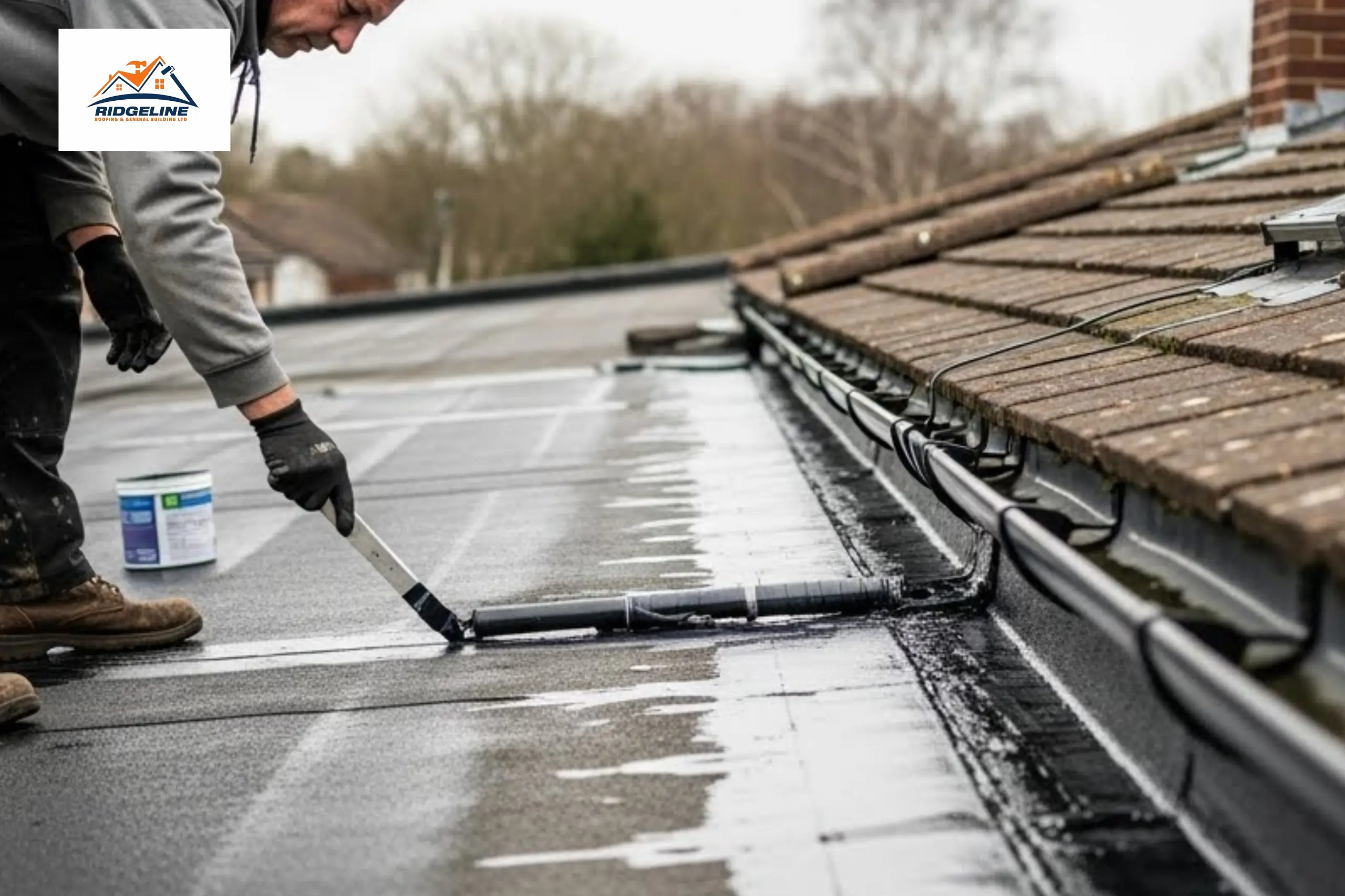
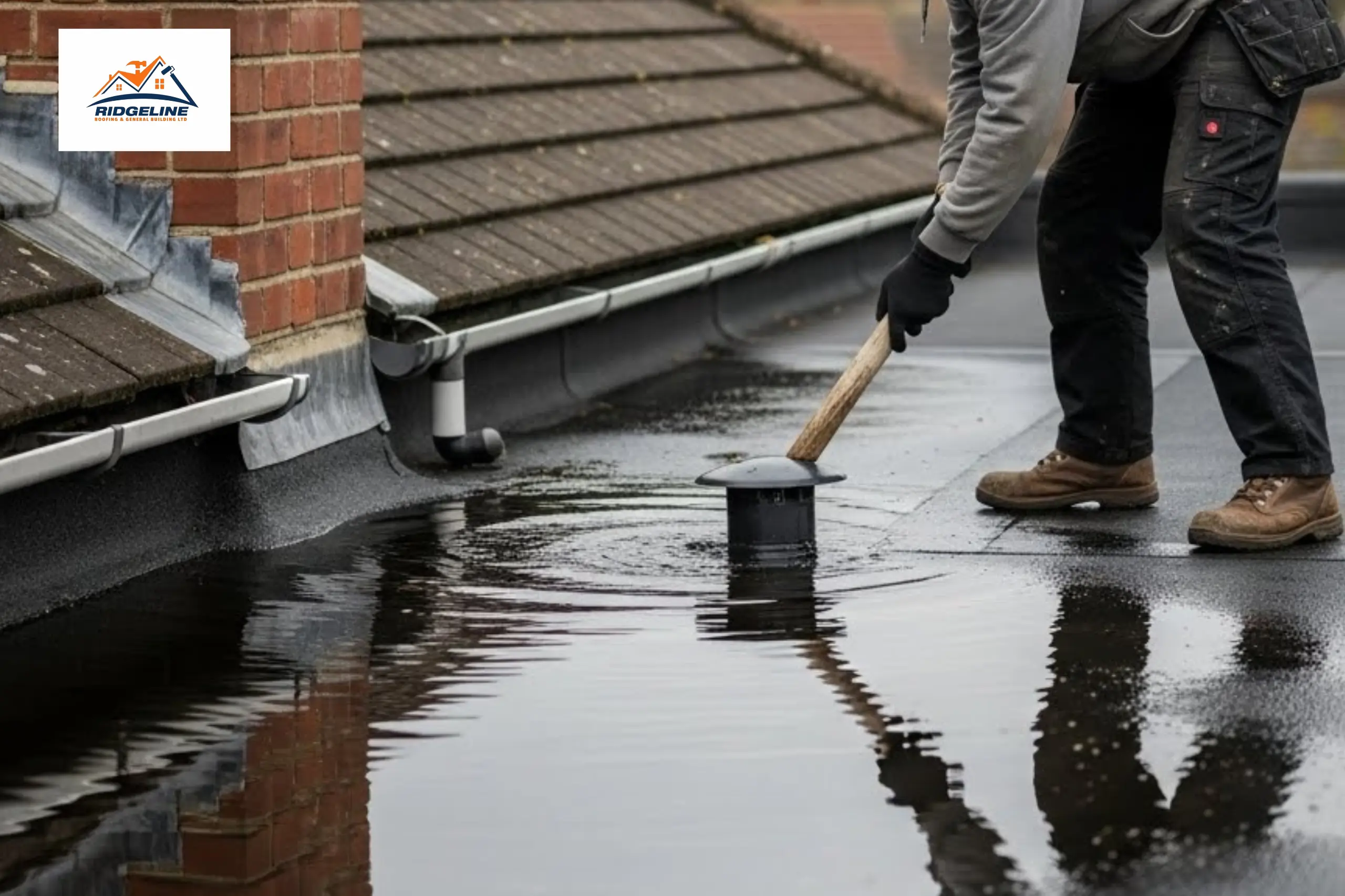
Step 6: Deal with Ponding Water
If water sits on the roof:
- Clear blocked outlets and gutters
- Check for minor dips that may need tapered insulation
- Do not ignore long-term standing water
If the leak continues, it’s likely that some damage hasn’t been identified or the problem runs deeper than first thought. In these cases, using professional flat roofing services is the safest way to fix the issue properly.
When DIY Flat Roof Repair Is NOT Recommended
Do not attempt DIY repairs if:
- The damaged area is large
- Multiple leaks are present
- The decking or insulation is wet or rotten
- Torch-on felt repair is needed
- The roof is over 15–25 years old
- You cannot work safely at height
If repairs are no longer suitable, this guide on how to install a flat roof explains what’s involved in a full replacement and why professional installation matters.
Flat Roof Repair vs Replacement
Repair Is Suitable When:
- Damage is minor and localised
- The membrane is in good condition
- The roof structure is sound
- The budget is limited
When repairs are no longer effective, understanding how much it costs to replace a roof can help you decide whether replacement is the better long-term option.
Replacement Is Better When:
- Leaks keep returning
- Large sections are deteriorated
- Insulation or decking is damaged
- Energy efficiency needs to be improved
A professional inspection ensures the correct decision is made.
Preventing Future Flat Roof Problems
To reduce the need for repeated flat roofing repair:
- Inspect your flat roof twice a year
- Keep gutters and drains clear
- Check seams and flashing after storms
- Avoid unnecessary foot traffic
- Arrange annual professional inspections
When a flat roof continues to leak or the damage is too extensive for a simple repair, turning to a reliable roofing company in Bishops Stortford ensures the problem is fixed correctly. Expert flat roof services are available across Bishops Stortford, Wood Green, and Walthamstow, including leak repairs, emergency call-outs, full roof replacements, guttering, fascias and soffits, and chimney work.
Conclusion
Fixing a flat roof early prevents leaks, damp, and costly damage. By spotting warning signs and using the right repair steps, minor issues can be handled safely. For larger problems or older roofs, a professional flat roof repair ensures long-lasting protection for your home.