A leaking chimney is one of the most common roofing issues homeowners in the UK face. Because chimneys sit above the roofline, they are exposed to constant rain, strong winds, and freezing temperatures. Over time, even small defects can allow water to enter your home.
If ignored, chimney leaks can cause damp patches, mould, damaged plaster, and long-term structural problems. This guide explains why chimneys leak, how to fix a leaking chimney, and when you should call a professional roofer.
Common Causes of a Leaking Chimney
UK weather plays a major role in chimney damage. Constant rain, temperature changes, and frost cause materials to expand, crack, and weaken over time. The most common causes of a chimney leak include:
Damaged Chimney Flashing
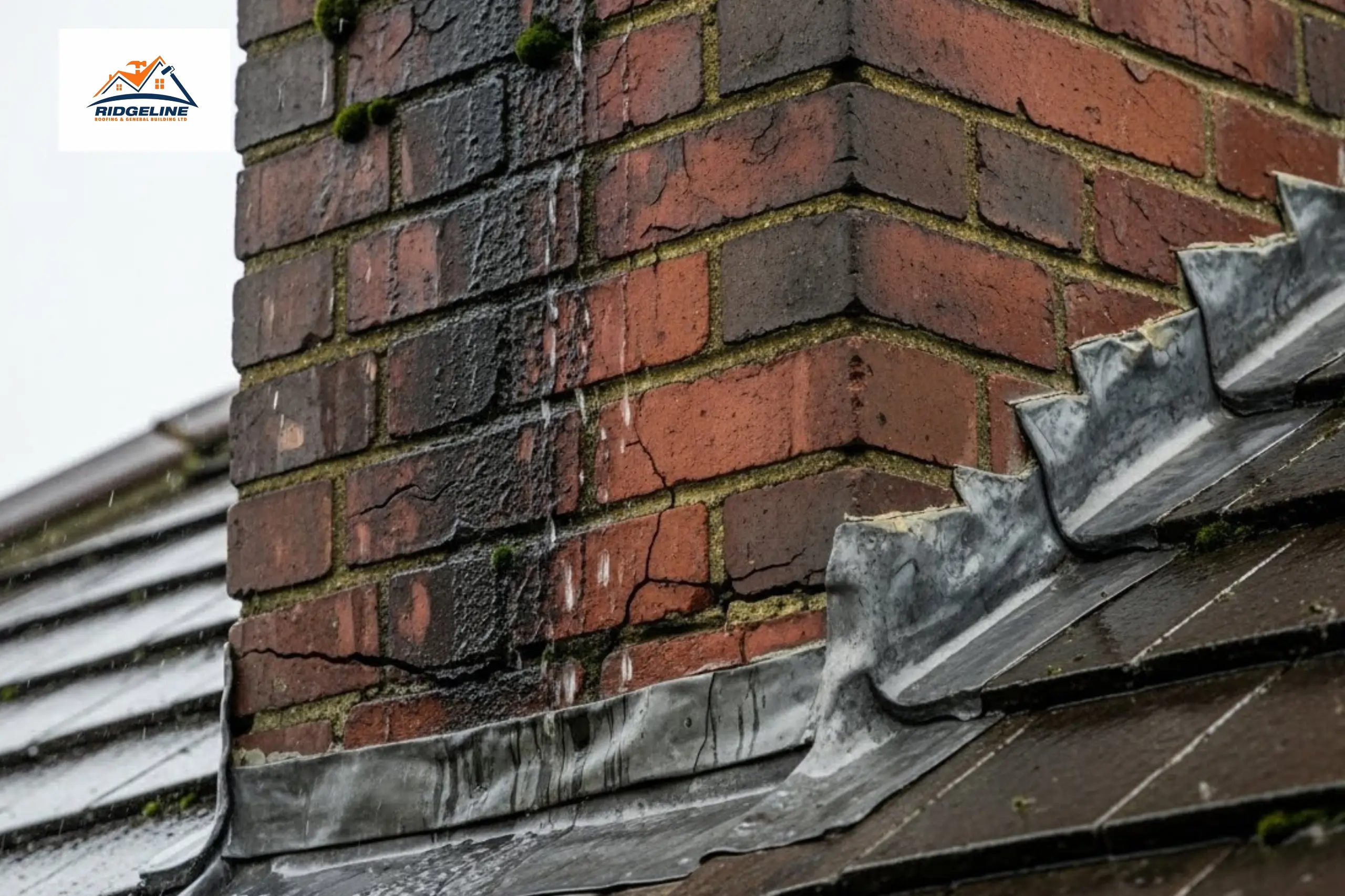
Flashing is the metal seal where the chimney meets the roof. When it cracks, lifts, or corrodes, rainwater can easily track inside. This is one of the leading causes of chimney leaks.
Cracked or Deteriorated Mortar
Mortar joints naturally wear down over time, especially on older chimneys. Once gaps appear, water is absorbed into the brickwork and travels indoors.
Failing Chimney Crown or Top
The chimney crown protects the top of the stack. Cracks or missing sections allow rainwater to run directly into the chimney structure.
Missing or Faulty Chimney Cap
Without a proper cap, rain, debris, and even birds can enter the chimney, leading to moisture buildup and internal leaks.
Roof Problems Around the Chimney
Broken tiles, ageing flat roofs, or poor previous roof repairs can cause water to flow toward the chimney rather than away from it.
Signs Your Chimney Is Leaking
Homeowners usually notice the signs of a chimney leaking problem inside the property first. Common warning signs include:
- Damp or brown stains on ceilings near the chimney
- Moist patches on chimney breasts
- Peeling paint or wallpaper
- Rust or corrosion on chimney dampers or metal components
- Musty smells or mould growth
- Drips or water sounds during heavy rain
These signs indicate that chimney leak repair is needed as soon as possible.
In some cases, moisture from a leaking chimney can damage the roofing layers below, where repairing roof felt from inside may help reduce internal damage until permanent repairs are completed.
How to Fix a Leaking Chimney Properly
1. Inspect the Chimney Thoroughly
Before making any repairs, you need to find exactly where water is coming in. Check:
- Flashing: look for cracks, rust, or loose sections where the chimney meets the roof.
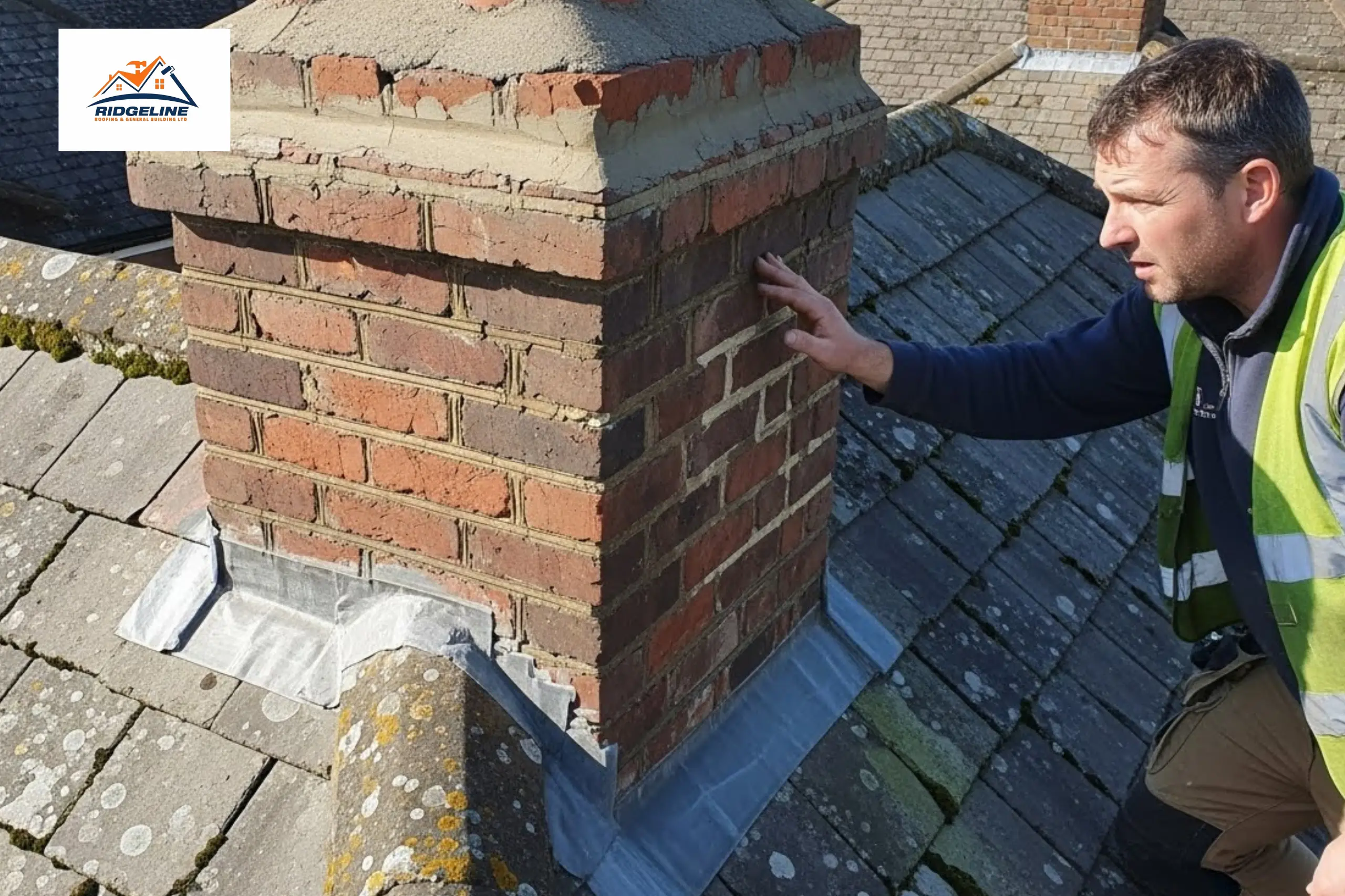
- Mortar joints: inspect the brickwork for gaps, crumbling, or worn mortar.
- Chimney cap and crown: ensure the top is intact and free of cracks.
- Surrounding roof area: broken tiles, flat roof damage, or blocked guttering near the chimney can also cause leaks.
A careful inspection can save you from repeated repairs. Roof-level checks should be done safely by professionals, especially if your roof is steep or high. Overflowing or damaged guttering can also direct water toward the chimney, making leaking gutter joint repairs an important part of the inspection process.
2. Repair or Replace Damaged Flashing
Flashing is the metal barrier that prevents water from seeping between your chimney and roof. If it’s damaged:
- Remove any old or rusty flashing.
- Install a new, high-quality metal flashing that fits snugly around the chimney.
- Seal all gaps with roofing sealant for a watertight finish.
Poorly installed flashing is one of the most common causes of chimney leaks.
3. Replace or Fit a Chimney Cap
A missing or faulty chimney cap can let rain, debris, and even birds into your chimney. To fix this:
- Check the cap for cracks or corrosion.
- Replace it with a durable, weather-resistant cap that fits your chimney perfectly.
- Ensure it allows proper ventilation while keeping water and debris out.
A good cap protects the chimney from leaks and reduces maintenance issues in the future.
4. Repoint Cracked or Worn Mortar Joints
Mortar between bricks can wear down over time, letting water penetrate the chimney. To repair:
- Remove, loose or damaged mortar carefully.
- Mix fresh mortar and fill the gaps.
- Smooth its level with the surrounding bricks using a jointing tool.
Repointing strengthens the chimney and prevents water from seeping inside the brickwork.
5. Clear Debris from the Chimney
Leaves, twigs, or creosote buildup can trap moisture, leading to leaks. Regularly clearing debris ensures water drains correctly and reduces the risk of damage.
6. Apply Waterproofing
After repairs, applying a breathable waterproof sealant to the chimney’s exterior adds extra protection. This keeps rain out while allowing trapped moisture to escape, preventing future leaks.
If you want peace of mind that the problem is fixed correctly, a professional chimney repair service can assess the damage and carry out the necessary repairs safely.
When to Hire a Professional for Chimney Repairs
While small maintenance tasks may seem manageable, most chimney leaks are best handled by professionals.
You should contact a chimney repair specialist if:
- The repair involves working at height, where safety equipment and experience are required
- The source of the leak is unclear, as water can travel through brickwork and roof structures
- There is extensive damage, such as failing mortar, damaged flashing, or structural movement
- Specialist tools or materials are needed to carry out long-lasting repairs
Hiring an experienced roofing company ensures the problem is fixed correctly the first time, protecting your home from damp, mould, and further structural damage. Professional repairs also give you peace of mind that your chimney is safe, secure, and fully weatherproof.
Preventing Chimney Leaks in the Future
Regular maintenance makes a big difference:
- Annual roof and chimney inspections
- Prompt roof repairs after storms
- Keeping guttering clear
- Repointing mortar before it fully fails
- Checking flat roofs around chimney bases
Preventative work is far cheaper than emergency repairs.
When a Chimney Rebuild Is the Best Solution
If a chimney shows signs of severe cracking, leaning, or widespread deterioration, patch repairs may not be enough. In these cases, a chimney rebuild provides a safe, long-term solution and prevents repeated leaks.
Conclusion
A leaking chimney is usually a sign that part of the chimney or the surrounding roof has started to fail. Identifying the cause early and fixing it properly helps prevent damp, mould, and structural damage inside the home. While small issues may seem manageable at first, most chimney leaks are best dealt with by local roofers to ensure the repair lasts. Regular checks and timely maintenance remain the most effective way to avoid repeat chimney leaks.