How to Fix a Leaking Roof?
A leaking roof can cause serious damage to your home, from stained ceilings and damp walls to mould growth and weakened structures. Even a small drip can quickly turn into a costly problem if left unchecked. Many homeowners ask how to fix a leaking roof and whether it’s possible to repair it themselves or if professional help is needed.
This guide has been prepared by our experienced roofers in Bishops Stortford to walk you through how to fix a leaking roof, from finding the source of the problem to sharing practical repair advice and simple ways to prevent future leaks.
Understand What Causes Roof Leaks
Most roof leaks come from one of the following problems:
Damaged or Missing Roof Tiles
Wind, ageing, or impact can loosen or break tiles. Once water gets under the tile layer, it travels quickly and causes internal damp. Replacing damaged tiles is a key step in roof repair for leaks.
Cracked Flashing
Flashing seals roof joints, including chimneys, walls, skylights, and vents. When it cracks or lifts, water can easily find its way inside.
Flat Roof Wear and Tear
Over time, flat roof membranes dry out, blister, or split. Standing water (ponding) also weakens the surface and causes leaks.
Blocked Guttering
When gutters overflow due to leaves or moss, water spills into the roofline, causing damp patches on ceilings and walls.
Damaged Fascias & Soffits
Rot, weathering, or old timber fascias and soffits let moisture pass into areas they should usually protect.
How to Fix a Leaking Roof (Step-by-Step)
These steps help you manage the leak safely while preventing further damage.
Step 1: Find the Source of the Leak
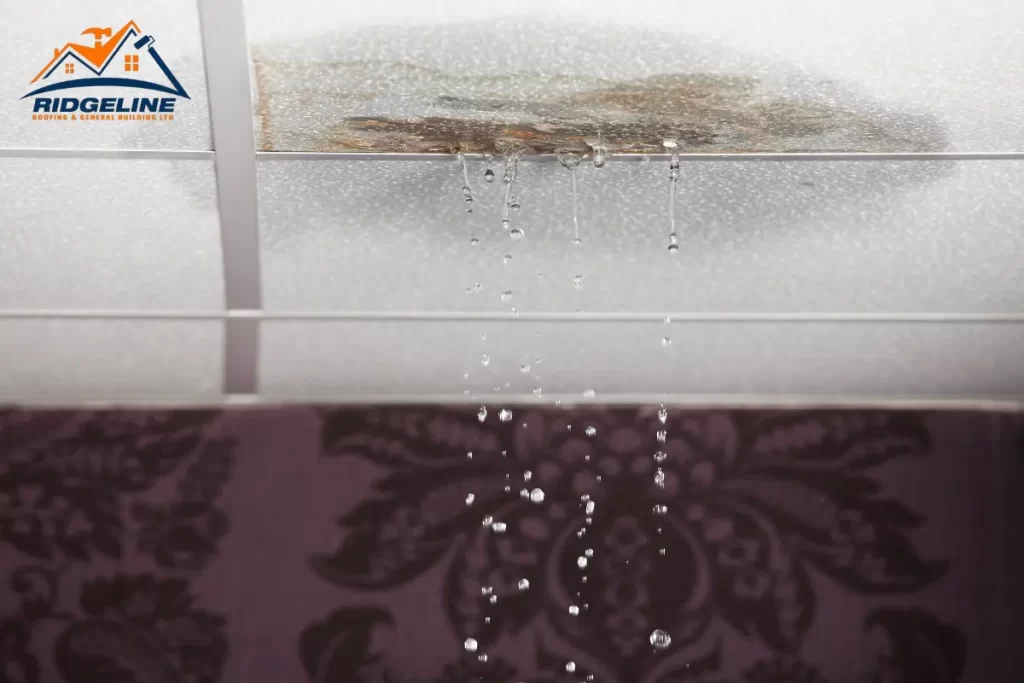
Start inside the house. Check:
- Ceiling stains
- Dripping sounds
- Wet insulation in the loft
- Damp corners around chimneys or roof edges
Remember: water often travels before it drips, so the visible patch might not be the exact location of the leak. Locating the source accurately is the first step in roof repair.
Step 2: Clear Gutters and Downpipes
If gutters in your Bishops Stortford property are overflowing, the leak may be coming from trapped water.
What to do:
- Remove leaves, moss, and debris
- Flush the gutter with water
- Check for cracks or sagging sections
This simple step alone fixes many leaking rooftop problems and if you need more help, check out our full guide on how to fix a leaking gutter joint.
Step 3: Inspect Tiles or Slats
If you can safely view the roof from the ground or a ladder (never climb onto the roof if unsure):
Look for:
- Cracked tiles
- Slipped tiles
- Missing tiles
- Debris stuck between tile layers
If a tile is loose and you know how to replace it, slide it out and fit a new one. Otherwise, leave this to a professional roof repair company.
Step 4: Check Flashing Around Chimneys and Joints
Flashing failures are one of the leading causes of leaks in older homes.
Look for:
- Gaps between the flashing and the brickwork
- Rust
- Loose mortar
- Split seals
Flashing or joint leaks can be tricky to fix on your own. Experienced roof repair services can ensure the area is sealed properly, preventing further water damage.
Step 5: Assess Flat Roof Sections
Flat roofs leak when:
- The membrane splits
- Water pools for long periods
- Edges or joints lift
Temporary patching may help short-term, but long-lasting flat roof repairs usually require professional attention.
Step 6: Apply Temporary Protection
Until repairs can be made:
- Place a bucket under the drip
- Move furniture away
- Use a waterproof tarp externally (if safe)
- Reduce interior damage by drying affected areas
This does not fix the leak, just controls the damage.
When You Should Not Attempt DIY Repairs
You should avoid DIY roof repairs if:
- The roof is high, steep, or unsafe
- The leak is severe or spreading quickly
- The source is hard to identify
- Flashing or chimney repairs are required
- Water is near the electrical fittings
- The weather is wet, icy, or windy
In these situations, calling professional roofers in Bishops Stortford is the safest and most reliable choice.
How to Prevent Roof Leaks in the Future
Long-term prevention saves more money than emergency repair. Here’s what helps:
- Clean gutters twice a year
- Replace damaged tiles promptly
- Remove moss growth early
- Inspect chimneys and flashing regularly
- Check flat roofs for surface cracks
- Trim trees touching or hanging over the roof
- Have a professional roof inspection every 1–2 years
Homes in Bishops Stortford especially benefit from regular maintenance due to seasonal temperature changes and rainfall patterns.
Conclusion
Fixing a leaking roof may seem daunting, but understanding the causes and taking timely action can save you from serious damage. Simple steps like clearing gutters, replacing damaged tiles, or patching minor leaks can prevent bigger problems. However, for complex issues such as flashing repairs, flat roof replacements, or extensive leaks, calling a professional roofing company in Bishops Stortford is the safest approach.
Frequently Asked Questions
How quickly should I fix a leaking roof?
As soon as you notice a leak. Even minor drips can cause structural damage and mould if left untreated.
Can I patch a leak myself?
Yes, minor cracks or small missing tiles can be temporarily patched. For flashing, chimneys, or large leaks, call a professional.
Do professional roofers provide emergency services?
Yes, reputable roofers can provide temporary fixes or emergency repairs to stop water damage until permanent solutions are applied.
What is the fastest way to fix a leak in the roof?
The quickest fix is to seal the leak with roofing cement or a patch as a temporary solution until proper roof leak repair is done.