Moss growing on your roof can be more than just an eyesore. Left untreated, it traps moisture, damages shingles, and reduces your roof’s lifespan, which can lead to costly repairs. At Ridgeline Roofing and General Building Ltd, our team of professional roofers in Bishop’s Stortford has seen firsthand how moss can affect homes.
This guide will show you safe, effective ways to remove moss from your roof, when the best time of year to remove moss from a roof is, and how to prevent it from returning, keeping your roof strong, clean, and protected.
Why Moss Grows on Roofs
Moss thrives in shaded, damp areas with limited sunlight. Common causes include:
- Overhanging tree branches that block sunlight
- Roofs with poor drainage or pooling water
- Persistent moisture from rain, dew, or blocked gutters
Homes in Bishop’s Stortford, Wood Green, and Walthamstow with these conditions are particularly vulnerable. Acting early is key to preventing damage.
Tools and Materials Needed to Remove Moss from Roof
Removing moss safely requires the right equipment:
Tools:
- Roof ladder for stable, safe access
- Soft-bristle brush or long-handled brush to gently remove moss
- Garden hose with spray nozzle for wetting moss and rinsing debris
- Protective gear: gloves, safety glasses, non-slip shoes
Materials:
- Roof-safe moss remover (chemical or natural)
- DIY options: oxygen bleach or white vinegar solution
- Zinc or copper strips for long-term moss prevention
Optional: gutter scoop or leaf blower to remove leaves and debris before cleaning.
How to Remove Moss From Roof: Step-by-Step Guide
Removing moss from your roof can protect your home, prevent damage, and keep your roof looking its best. Follow these steps to safely get rid of moss.
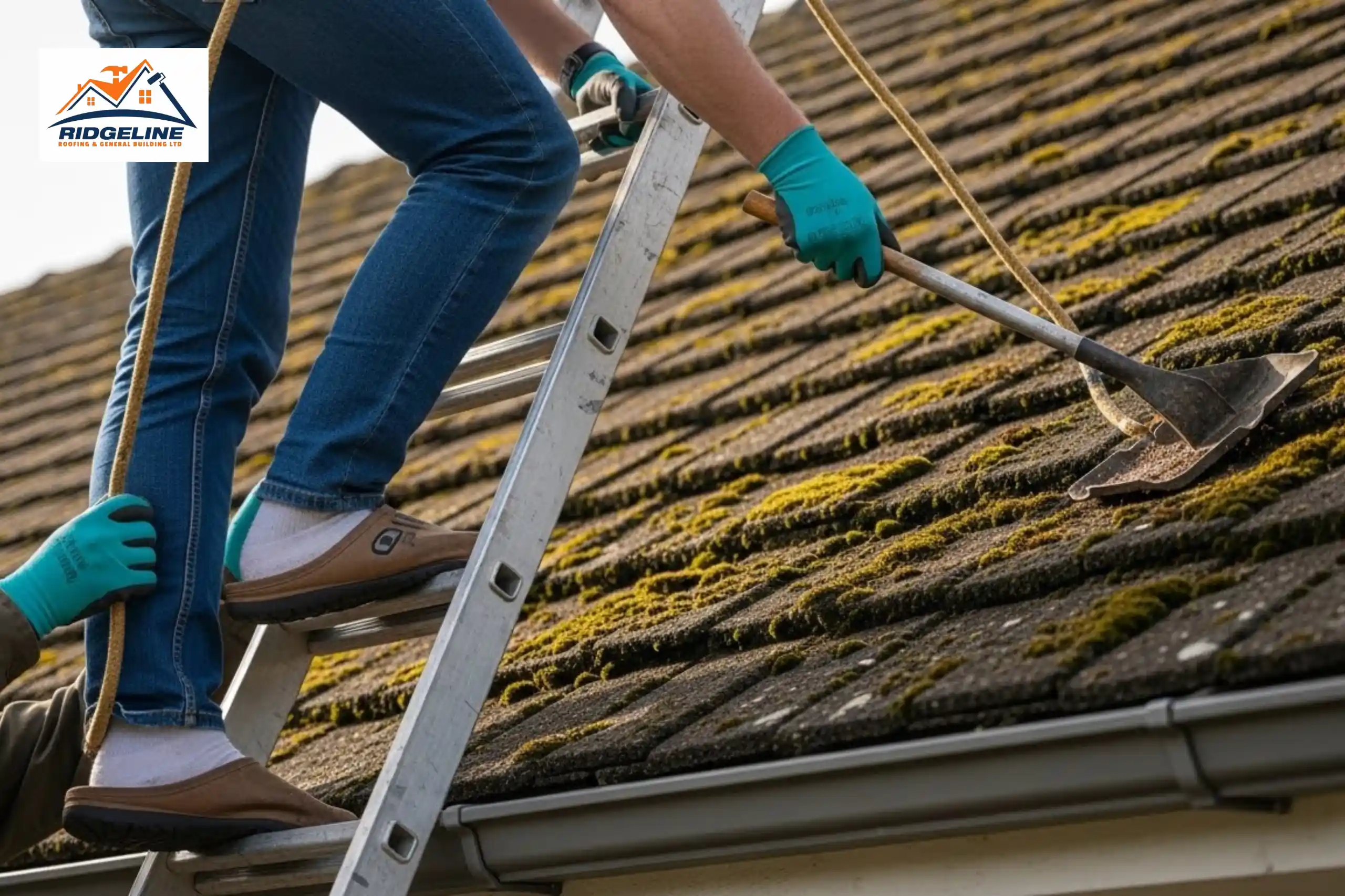
1. Prioritise Safety
- Always wear slip-resistant shoes, gloves, and safety glasses.
- Use a stable ladder and have a spotter.
- Avoid working on steep or fragile roofs unless you’re a professional.
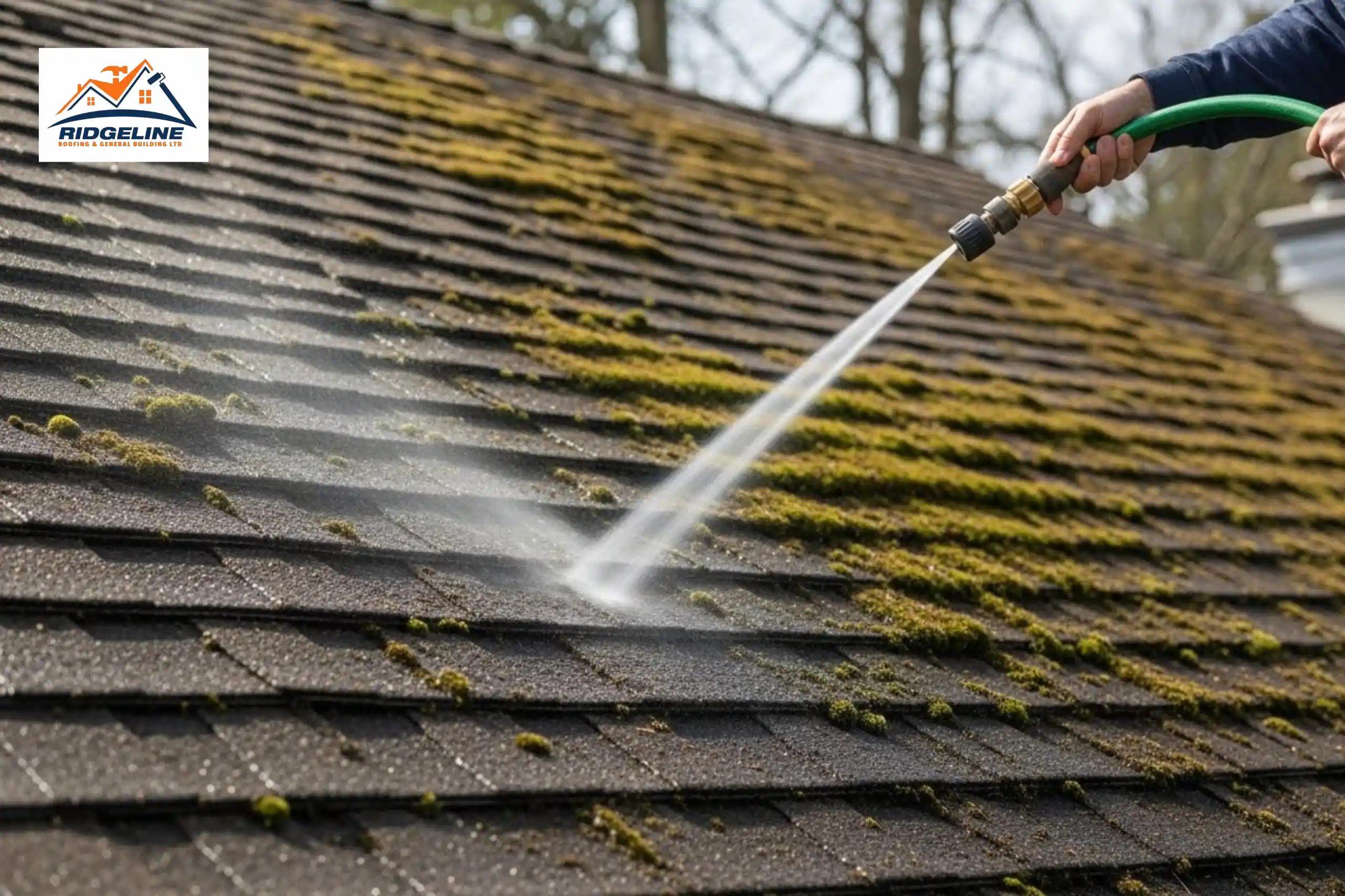
2. Wet the Moss
- Lightly soak the moss with a garden hose.
- Avoid pressure washers, they can damage shingles.
- Pre-wetting helps loosen moss and makes scrubbing easier.
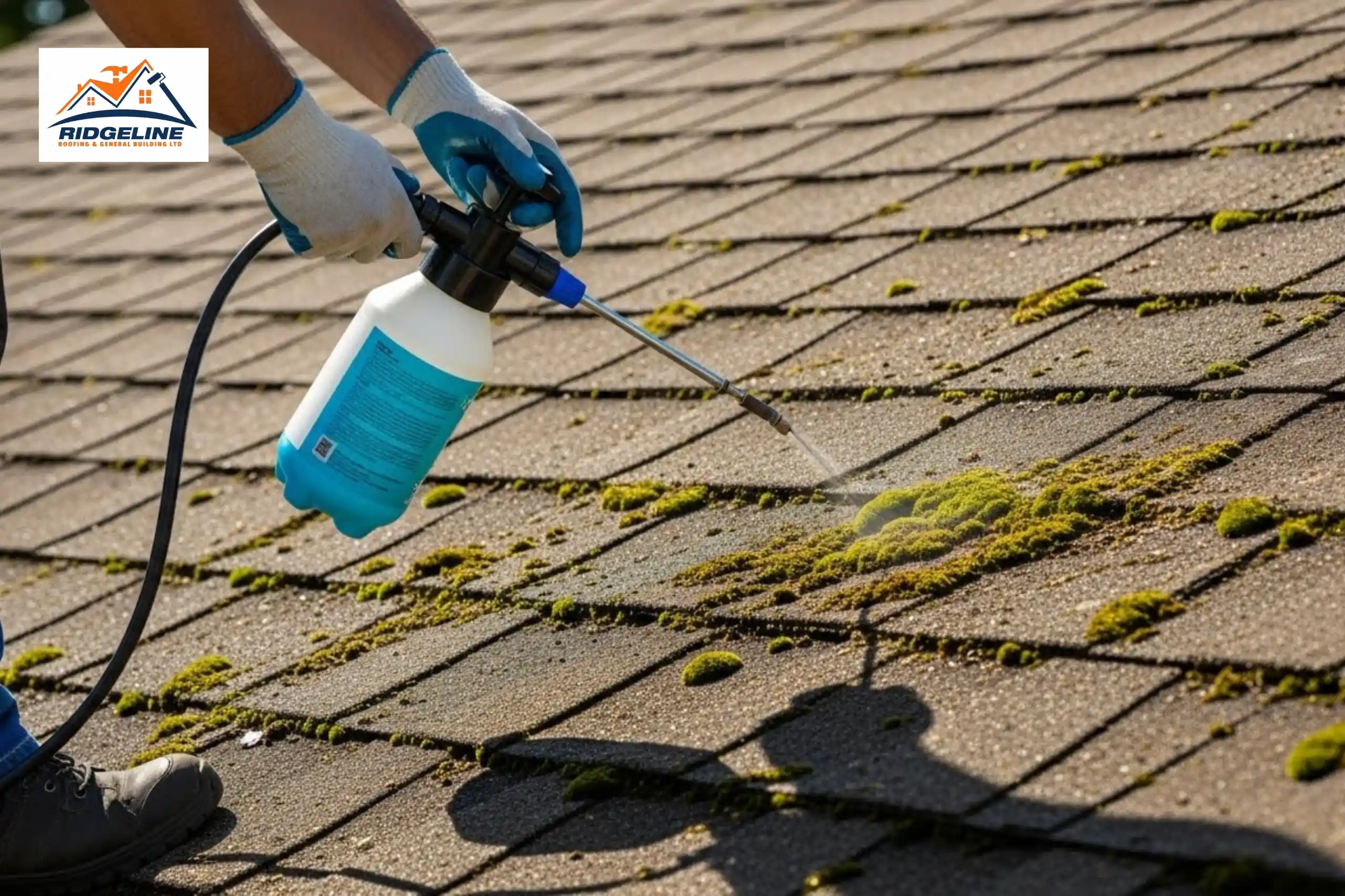
3. Apply a Moss-Killing Solution
- Use a roof-safe moss remover or a DIY solution (oxygen bleach or vinegar).
- Follow product instructions carefully and let it sit long enough to loosen the moss.
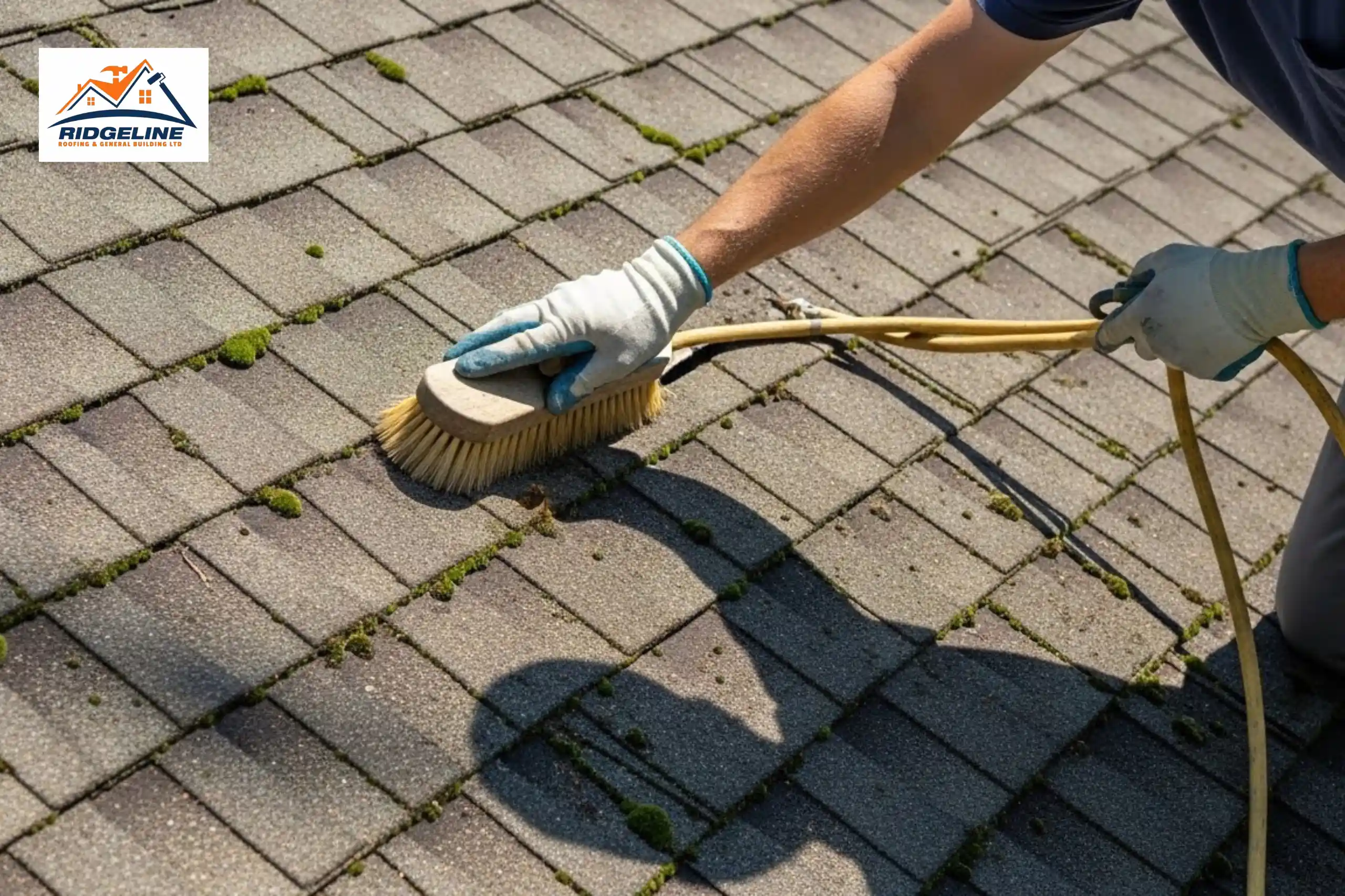
4. Scrub the Moss
- Gently scrub from top to bottom using a soft-bristle brush.
- Avoid lifting or damaging shingles.
- Focus on shaded areas, roof valleys, and places where moss accumulates.
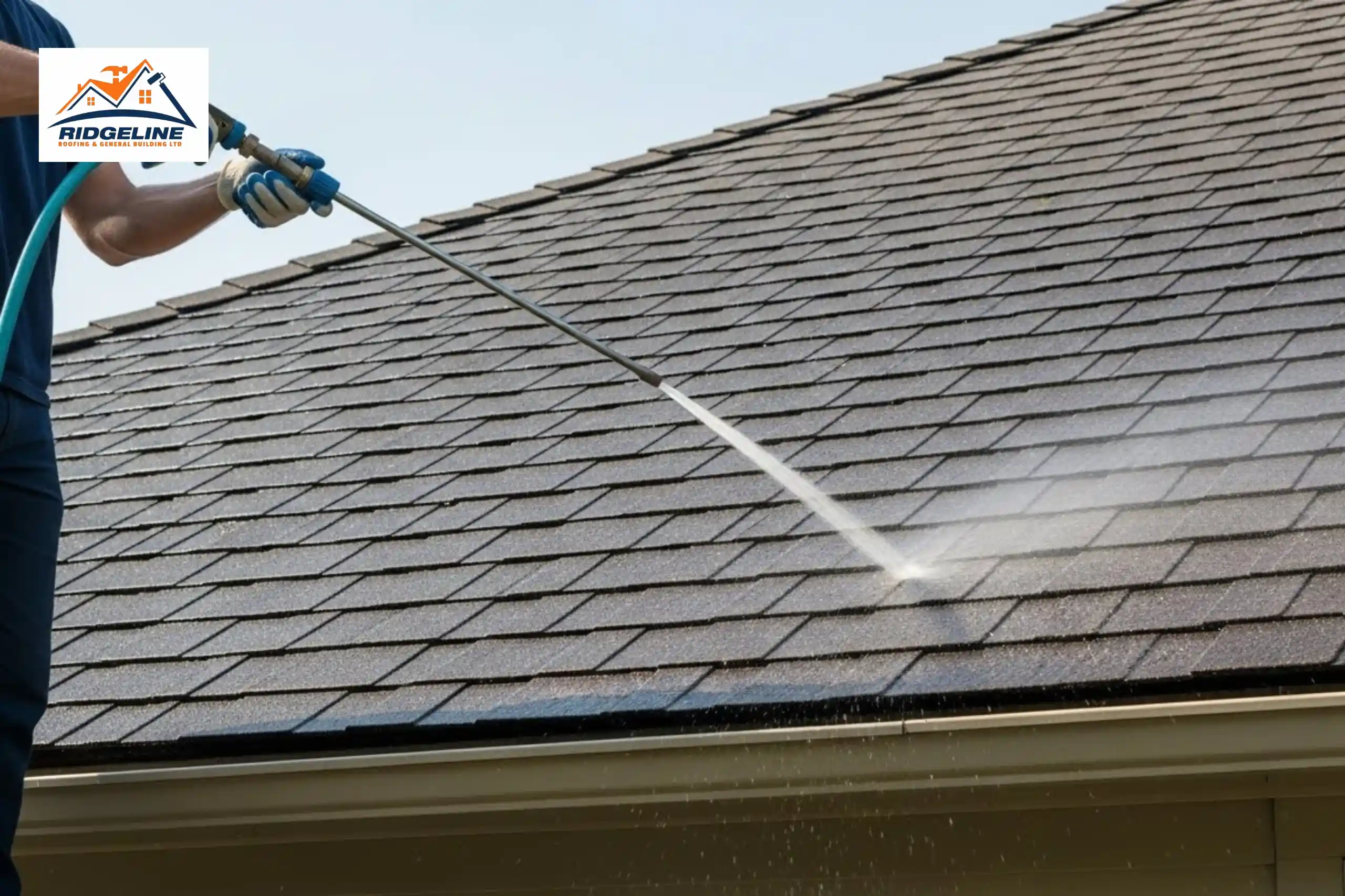
5. Rinse and Inspect
- Rinse the roof with low-pressure water, directing water downwards.
- Let it dry thoroughly, then check for any remaining moss patches.
The best time of year to remove moss from a roof is during cooler, dry weather when sunlight is minimal, but conditions are safe for working on your roof.
Other Moss Removal Methods
If you prefer alternatives to traditional cleaning, these DIY solutions can help tackle moss safely and effectively.
Vinegar Solution
Mix equal parts white vinegar and water in a spray bottle. Spray on moss and wait 20–30 minutes. The moss will turn brown, then gently scrub it off. Vinegar is safe for nearby plants but avoid over-spraying garden areas.
Oxygen Bleach
Oxygen bleach kills moss without harming your roof or plants. Mix with water per instructions, apply to moss, wait 15–20 minutes, then scrub and rinse. Ideal for large roof areas.
Tip: These DIY methods are best for small areas. For extensive moss or high-risk roofs, professional help is safer.
The Impact of Moss on Your Roof
Moss acts like a sponge, holding water that can:
- Weaken shingles, causing them to curl or crack
- Encourage mould and algae growth
- Reduce roof lifespan and increase leaks
- Decrease energy efficiency due to heat loss or gain
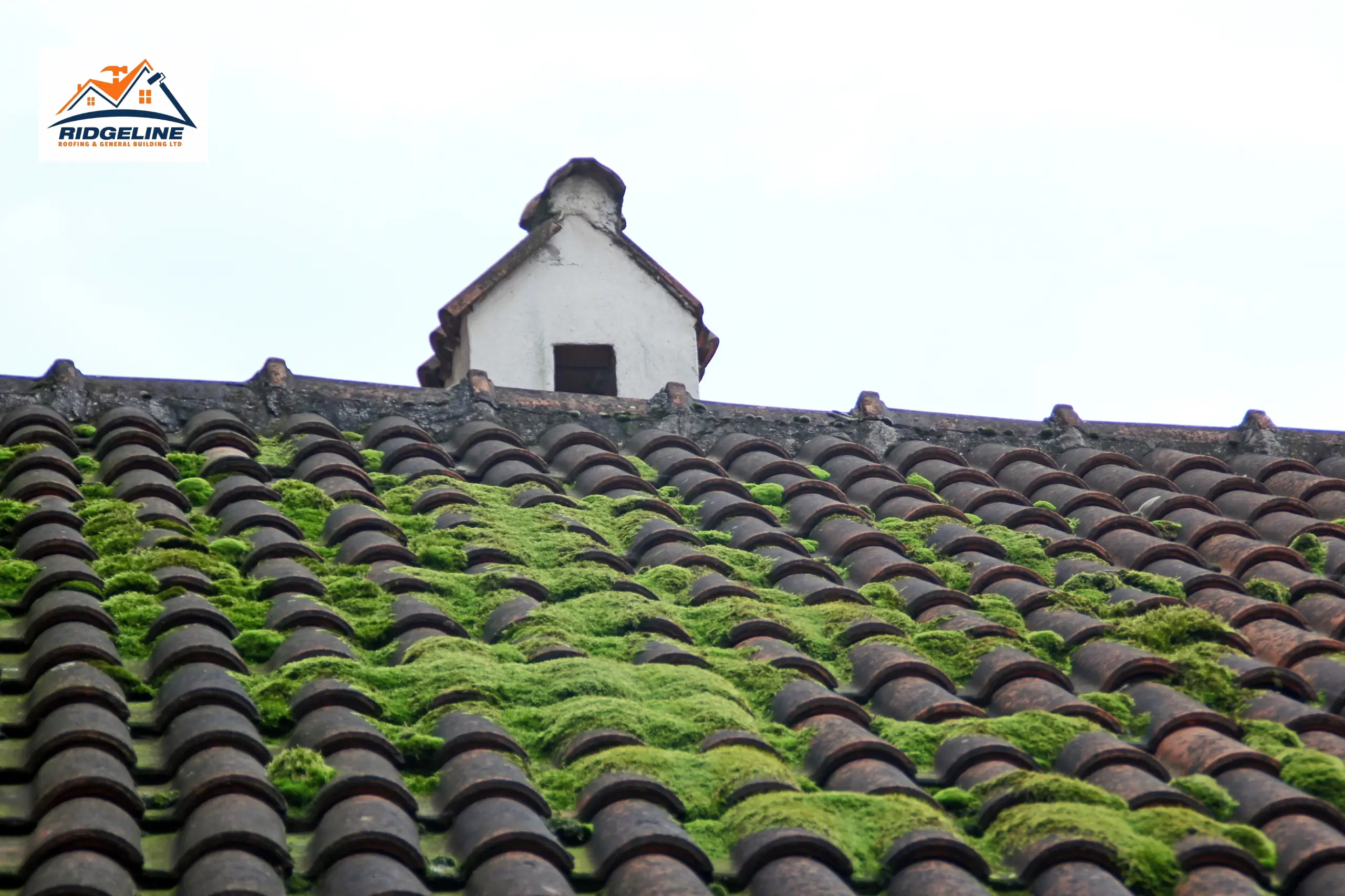
We’ve seen homes in Bishop’s Stortford and Wood Green where untreated moss led to leaking gutters and water damage in the loft, costing thousands in repairs. If moss removal causes any damage to your roof, it’s important to arrange roof repair services as soon as possible. Roofing issues can quickly become expensive if left untreated, so contacting a professional early can help keep repair costs to a minimum.
How to Prevent Moss Regrowth
Taking simple steps after cleaning your roof can help stop moss from coming back, keeping your roof strong and looking great for years.
Improve Roof Drainage
- Keep gutters and downspouts clear for smooth water flow.
- If water pools in certain areas, consult a roofing contractor to improve drainage.
Trim Overhanging Branches
- More sunlight and less leaf debris make it harder for moss to grow.
Regular Roof Maintenance
- Inspect your roof at least once or twice a year, especially after rainy seasons.
- Remove small moss patches early before they spread.
Zinc and Copper Strips
- These strips release minerals when it rains, preventing moss growth.
- Install just below the ridge line for long-term, maintenance-free protection.
DIY vs Professional Moss Removal
When it comes to removing moss from your roof, you have two main options: doing it yourself or hiring professionals. Here’s a breakdown of the costs, benefits, and best situations for each approach.
DIY Moss Removal
- Costs: £250–£350 for tools and materials
- Best for small roofs with light moss
Avoid DIY if your roof is steep, high, old, fragile, or heavily covered in moss
Professional Moss Removal
- Costs: £300–£600
- Provides safer, faster, and more thorough results
- Ideal for steep roofs, large areas, or persistent moisture problems
- Ensures long-term protection and prevention of regrowth
If moss growth is heavy, difficult to access, or located on a steep roof, it’s best to hire a professional roofing services provider. Experienced roofers have the right equipment and expertise to remove moss safely without risking damage or injury.
Conclusion
Moss growth might look minor at first, but over time it can hold moisture, weaken roofing materials, and shorten the life of your roof if it’s ignored. Regular checks, gentle cleaning methods, and early action are key to keeping your roof in good condition. By understanding how moss forms and how to manage it safely, homeowners can reduce the risk of damage and avoid unnecessary repair costs. If you’re unsure about working at height or dealing with heavy moss growth, speaking with experienced local roofers can help ensure your roof stays protected, durable, and weather-ready for the long term.